Thursday, July 8, 2010

Lomography and the Diana F+

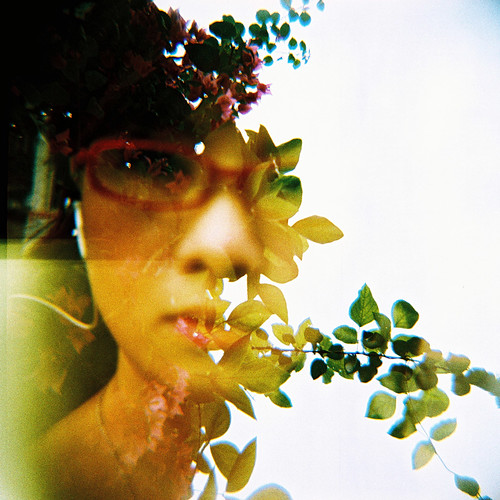
Lomography emphasizes casual, snapshot photography. Lomographic cameras are lightweight, plastic film cameras with many accessories from fish eye lenses to attaching flash with colour filters. Characteristics such as over-saturated colours, blurring, "happy mistakes" and alternative film processing are often considered part of the Lomographic Technique. These unusual and exciting effects are what draw me to the world of Lomography.

Just over a year ago I purchased a Diana F+ camera in the hope of documenting life through the wacky images it produces. However college and life took over and before I knew I it my camera was gathering dust. On the few occasions I did take it out my friends were convinced that it was a fake camera! Now that I'm out of college and have a good job with regular hours my original interest in the camera has surfaced and my friends will have to get used to seeing the toy camera pout and about.

If your interested in lomographic cameras the best website I've found is http://canada.shop.lomography.com/. Granted the cameras are practically the same price as a cheap digital plus you have to buy the film but that's what so great about it, with film your images will always be printed rather than being forgotten on your computer.


Below are some images I found on-line that were taken by the Diana F+. Enjoy!
Friday, July 2, 2010

Portrait Photography

I find something so fascinating about portrait photography, its as if through the these up close images you are getting to know the subject of the portrait without ever meeting them. Portrait photography has the ability to display the personality and even the mood of the subject. It can show the vulnerability of people as they are not able to hide from the camera lens.

One of my favorite portrait artists is Diane Arbus. Diane Arbus was an American photographer, known for her black and white square photographs, mainly portraits, of people on the outskirts of "normality". She was fascinated with the abnormal and would photograph anyone from a dwarf to a nudist, she would also go to Freak shows in search of her subject matter. Arbus believed that "there are things nobody would see if I didn't photograph them." She took portrait photography to a new level by exploring what society chose to ignore (examples below).


Diane Arbus was before the digital age so she printed up all of her photographs in her darkroom, they weren't left in a file on a computer being forgotten. Although the digital age has been a blessing for photography, pushing it beyond what previously couldn't be dreamed of. I feel that it has also been a slight curse to photography, with all the mass production around us people have stopped treasuring photographs as they used to. This snap happy society documents every moment for the images just to become lost amongst the thousands on a hard-drive, I am the first to admit that I fall into this category.

We should start admiring the photo's we have. Go through your computer and re-discover the photographs you once loved. Get them printed and decorate your home with your own art. the popularity with printing on canvas is growing everyday, through this process you can turn your image files into a 3D piece ready to hang. For some ideas and to see how easy this process is visit our website on http://www.usaoncanvas.com/.

Tuesday, June 22, 2010

Photo-Montage

Looking at the Starn Twins work in my last blog post got me thinking about photo-montage and the endless possibilities. Just through taking a lot of photographs, either all of the same subject or photographs of a common theme or really whatever you want, and collaging them together like a jigsaw you can achieve the most amazing/original works of art.


below is a photo-montage created by David Hockney. He is a great example of the experimentation and fun you can achieve through photo-montage! The portrait subject is actually his own mother.

Another approach to photo-montage is taking photographs along the same theme and putting them together to create something completely different. I've noticed an increase in the popularity of collage work we do here and think that its a great way of taking digital images and through giclee on canvas turning them into something completely different. To check out some of the collage compositions we offer follow the link:
http://www.canadaoncanvas.com/include/canvas_photo_collages.php

Thursday, June 17, 2010

Liquid Light

One of my favorite aspects of Darkroom photography is its experimental side, in this case experimentation with liquid emulsion, also know as liquid light. Liquid emulaion is a process through which you can transfer photograph's onto almost any medium. It allows you to set no limits with your photography, exposing onto fine art paper, wood, fabric, metal, glass etc. You could even expose onto canvas over a painting or digital Giclee printing (for info on canvas printing see http://www.canadaoncanvas.com/.

The Great Picture, seen below, is the result of a 9-month project involving 6 artists and 400 volunteers. The negative image is 3,375 square feet and dominates the aircraft hanger in Southern California where it was shot. It required more than 80 quarts of Liquid Light emulsion. This project displaying the limitless ends to liquid light.
You can order liquid emulsion form plenty of different websites and compared to the cost of photography paper it is not that unreasonable. Here are some rough guidelines for the liquid light process:
- first you will need your film negative or alternatively a pin hole camera.
- in the darkoom melt the emulsion by placing the bottle in a hot water bath, should only take a few minutes to melt.
- using a brush or sponge evenly coat your medium with a thin layer of emulsion, remembering to coat test strips in the same medium too as the exposure time will differ from material to material. Allow to dry, best left to dry in the absolute dark as opposed to under a safe light.
- once dry use your test strips to determine the exposure time and expose away! I found when working on fabric that the exposure time was greatly increased.
- develop as you would photographic paper except give it extra time in each tray. As the emulsion will soak into the mediums it will need to be in the developer longer to fully develop and if not left in the fix for long enough will keep developing once exposed to light.
- leave to dry


My favorite artists who use liquid emulsion in their work are the Starn Twins. Left is a piece their “Attracted to Light” series in which they turn bug close-ups into large scale photo-montages.

Friday, June 11, 2010

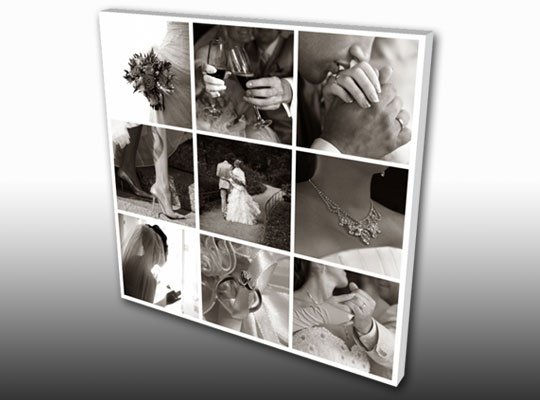
Wedding Photographers: Capturing Your Clients' Special Day on Canvas


A canvas print is a unique way to preserve the memories from a very special day in a couple's life.


When wedding photographers sell prints to their clients, it's now quite easy to offer them prints in a medium other than the usual photographic fine art print: Giclees on Canvas.


A stretched canvas print has a different kind of presence than a framed image. It creates an image that stands out from the wall and demands to be observed. With no need to frame and the Canvas's produced ready-to-hang, giclee on canvas is a easy way to turn images into works of Art.


Many of the orders we receive here at www.CanadaOnCanvas.com are of Wedding photographs. The orders differ immensely from large scale prints of the bride and groom, collages of moments throughout the day, group photographs of the bridal party to symbolic images celebrating their joyous day.


We also provide free shipping for orders over $99 to all of Canada and USA. To get an idea of our prices please follow the link to our canvas price calculator: http://www.canadaoncanvas.com/include/prices.php

Tuesday, June 8, 2010

Woodworking for engineers

Cool Woodworking projects including:
Woodworking machinery, Joinery jigs, Furniture projects, Wooden machines, Home improvement projects, Wood shop tricks, Gear template generator & Eyeballing game


I like this one too:


For more projects visit:
http://woodgears.ca


Thursday, June 3, 2010

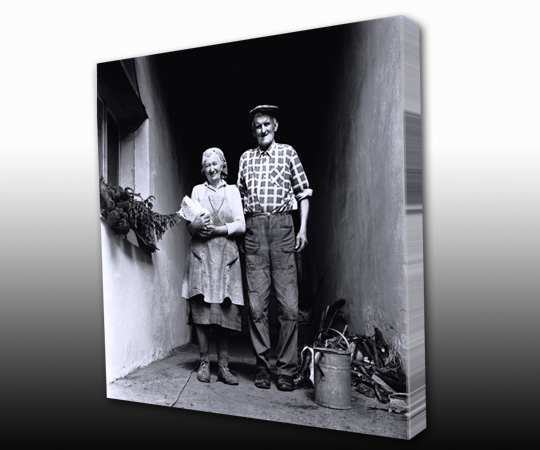
Taking old tresured photograph's and turning them into works of Art


The new trend of printing photo's onto canvas is a great way to turn your favorite images into works of art, whether it is a digital image that never made it out of your hard-drive or an old photograph you would like reproduced. We offer a scanning service that would allow us to scan and enlarge an old image, giving it a new lease of life.


Our finished products are gallery wrapped and ready to hang—that is, the canvas is wrapped around the sides and back of a wooden frame, then stapled to the back where it's hidden from view when the artwork is hung on a wall for display. A wire is also affixed to the back, and we package the hooks and nails for you to use for wall hanging.


Need a gift idea for paternal figure in you life? We are offering a 10% Fathers Day discount. Since we accept orders online, and offer free standard shipping across Canada and the US for orders over $99, that makes things a little more convenient for those of you outside our locale (we're located in Vancouver BC).

Check out our other facilities offers on http://canadaoncanvas.com/.