Photographs where once celebrated because they could show us the world as it is, but as soon as the photographic technique was invented, people began finding ways to use the camera to show us the world as it isn't.
The one beautiful example of this is tilt-shift photography, a technique used by photographers like Vincent Laforet use to create the uncanny effect of making the real world look like a miniature model.
“Tilt shift lenses focus on a single part of the photo and shift (blur) the surrounding area to create an optical illusion of miniaturized scenery. Real tilt shift lenses are quite expensive, but a similar effect can be achieved by using Photoshop after you take the photo.”
Notes the Visual Photo Guide. (click the link for a great tutorial on how to achieve this effect in photoshop)
with the current popularity of photoshop effect like pop art, we no longer have to rely on paint and canvas to show others the world of our imaginations.

Tuesday, January 25, 2011

Tuesday, October 19, 2010
Make your friends look scarily fabulous

With Halloween only 12 days away (yes, I counted) I am sure everyone is wracking their brain and the goodwill for the ultimate showstopping and previous-year-topping. costume. The 31st is the night when everyone looks their very best, their very worst, or, my personal favorite, their most ridiculous.
It would be a shame to let all that imagination once in the year bizarreness go unrecorded. This year could supply you with photos that will warm your hear for years to come.
Party shots and night shots are not easy to take, so I thought now might be a good time to get a little help from the pros on how to capture the mayhem.
Kim Vallee has some great, simple advice. Two tips she had that I always use is to take unposed shots and to skip the flash. find the rest of her advice here including tips on more technical things like ISO.
Beyond Photo Tips has some other advice. They recommend flash, and explain how to use it well. They also suggest you take photos with your lens zoomed all the way out to reduce shake, and trying slower exposures for intentional motion blur. the rest of what they have to say is here
i highly recommend checking these tips out. Do all of your friends a favor and help them remember the night.
Friday, July 30, 2010
Vancouver Sights and Sounds
The end of July... Summer is quickly coming to an end, but since this is Vancouver, it's going out with a bang. Literally.
Saturday night marks the end of the exceptional Celebration of Light fireworks competition showcased in English Bay; the event, which has an annual attendance of around 1.4 million, will culminate in the highly anticipated finale hosted by China. Huge crowds are expected to descend upon the usually laid-back West End, causing the streets to look as they did during the 2010 Olympics.
However, the fireworks are not the only place you will see a rainbow of colors this weekend; there will be Pride flags as far as the eye can see in preparation for Vancouver's Annual Pride Parade on Sunday. The parade, which will consist of floats, marching bands and various community groups, strives to educate the public and highlight the positive impact LGBT groups have on Vancouver. In addition to being a great cause, the parade itself is a treat for the eyes and ears; so bring your cameras, enjoy yourself and take lots of pictures (to be turned into Canvas Art, obviously) in the summer heat - that way, when the winter comes, you can reminisce about the dog days of summer.
Saturday night marks the end of the exceptional Celebration of Light fireworks competition showcased in English Bay; the event, which has an annual attendance of around 1.4 million, will culminate in the highly anticipated finale hosted by China. Huge crowds are expected to descend upon the usually laid-back West End, causing the streets to look as they did during the 2010 Olympics.
However, the fireworks are not the only place you will see a rainbow of colors this weekend; there will be Pride flags as far as the eye can see in preparation for Vancouver's Annual Pride Parade on Sunday. The parade, which will consist of floats, marching bands and various community groups, strives to educate the public and highlight the positive impact LGBT groups have on Vancouver. In addition to being a great cause, the parade itself is a treat for the eyes and ears; so bring your cameras, enjoy yourself and take lots of pictures (to be turned into Canvas Art, obviously) in the summer heat - that way, when the winter comes, you can reminisce about the dog days of summer.
Thursday, July 22, 2010
Firework Photography
Watched the Celebration of Light last night, USA were the first to compete with their fireworks working in tune to music from the 40's such as Fever and Mambo Italiano. It was really spectacular. Fireworks at Festival of Lights show by USA at English Bay in Vancouver, B.C., on July 21, 2010.
Fireworks at Festival of Lights show by USA at English Bay in Vancouver, B.C., on July 21, 2010.As I was watching the fireworks from an apartment overlooking English Bay I was able to see the crowds of thousands lined up along the beach and parks watching the performance. At one point the crowd resembled that of a concert when the ballad comes on and everyone holds up their lighters, with the light from their display monitors on their cameras illuminating them. This got me thinking about the thousands of photographs that would be taken that night and firework photography. Below are some photographs I found online and really love (think the silhouettes really make some of the images):


Monday, July 12, 2010
35mm Film Scanner
Today I came across a scanner that solely scans film negatives and slides. These scanners have clearly been around for years but having just heard about them I must say I think its a great idea. As a photographer who likes to focus mainly on film, dark-room access is not always available and finding scanning facilities can be a bit of a hassle too. These scanners would allow me to play around with my photographs and decide which ones are worth further work in the dark-room. From reading up on the scanners it appears that the affordable ones (around the $100 mark) won't give the best quality but if you are comfortable with photo-shop you should be OK. 
The scanning devices can be connected to your computer or you can use an SD disk to store the scans. they appear to be less fidgety then using a film adapter on normal scanners and the majority of them claim that the scan of a negative will only take a few seconds. From there you will have digital images of your previous film negatives that you didn't know what to do with. You can go on to having them printed, maybe even trying the growing trend of printing them on canvas, http://www.canadaoncanvas.com/.
Definitely worth further investigation and a possible purchase! if your interested Amazon appears to have a good selection of them and I found the reviews very helpful.

VuPoint Solutions offers the FC-C520-VP digital film and slide scanner, a device that allows you to convert your old 35 mm standard negatives and mounted sliders to digital images.
The scanning devices can be connected to your computer or you can use an SD disk to store the scans. they appear to be less fidgety then using a film adapter on normal scanners and the majority of them claim that the scan of a negative will only take a few seconds. From there you will have digital images of your previous film negatives that you didn't know what to do with. You can go on to having them printed, maybe even trying the growing trend of printing them on canvas, http://www.canadaoncanvas.com/.
Definitely worth further investigation and a possible purchase! if your interested Amazon appears to have a good selection of them and I found the reviews very helpful.
Thursday, July 8, 2010
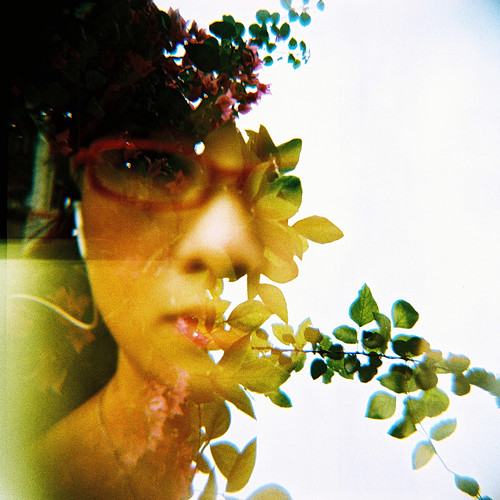
Lomography and the Diana F+
Lomography emphasizes casual, snapshot photography. Lomographic cameras are lightweight, plastic film cameras with many accessories from fish eye lenses to attaching flash with colour filters. Characteristics such as over-saturated colours, blurring, "happy mistakes" and  alternative film processing are often considered part of the Lomographic Technique. These unusual and exciting effects are what draw me to the world of Lomography.
Just over a year ago I purchased a Diana F+ camera in the hope of documenting life through the wacky images it produces. However college and life took over and before I knew I it my camera was gathering dust. On the few occasions I did take it out my friends were convinced that it was a fake camera! Now that I'm out of college and have a good job with regular hours my original interest in the camera has surfaced and my friends will have to get used to seeing the toy camera pout and about.
If your interested in lomographic cameras the best website I've found is http://canada.shop.lomography.com/. Granted the cameras are practically the same price as a cheap digital plus you have to buy the film but that's what so great about it, with film your images will always be printed rather than being forgotten on your computer.
Below are some images I found on-line that were taken by the Diana F+. Enjoy!


 alternative film processing are often considered part of the Lomographic Technique. These unusual and exciting effects are what draw me to the world of Lomography.
Just over a year ago I purchased a Diana F+ camera in the hope of documenting life through the wacky images it produces. However college and life took over and before I knew I it my camera was gathering dust. On the few occasions I did take it out my friends were convinced that it was a fake camera! Now that I'm out of college and have a good job with regular hours my original interest in the camera has surfaced and my friends will have to get used to seeing the toy camera pout and about.
If your interested in lomographic cameras the best website I've found is http://canada.shop.lomography.com/. Granted the cameras are practically the same price as a cheap digital plus you have to buy the film but that's what so great about it, with film your images will always be printed rather than being forgotten on your computer.
Below are some images I found on-line that were taken by the Diana F+. Enjoy!


Friday, July 2, 2010
Portrait Photography
I find something so fascinating about portrait photography, its as if through the these up close images you are getting to know the subject of the portrait without ever meeting them. Portrait photography has the ability to display the personality and even the mood of the subject. It can show the vulnerability of people as they are not able to hide from the camera lens.
One of my favorite portrait artists is Diane Arbus. Diane Arbus was an American photographer, known for her black and white square photographs, mainly portraits, of people on the outskirts of "normality". She was fascinated with the abnormal and would photograph anyone from a dwarf to a nudist, she would also go to Freak shows in search of her subject matter. Arbus believed that "there are things nobody would see if I didn't photograph them." She took portrait photography to a new level by exploring what society chose to ignore (examples below).


Diane Arbus was before the digital age so she printed up all of her photographs in her darkroom, they weren't left in a file on a computer being forgotten. Although the digital age has been a blessing for photography, pushing it beyond what previously couldn't be dreamed of. I feel that it has also been a slight curse to photography, with all the mass production around us people have stopped treasuring photographs as they used to. This snap happy society documents every moment for the images just to become lost amongst the thousands on a hard-drive, I am the first to admit that I fall into this category.
We should start admiring the photo's we have. Go through your computer and re-discover the photographs you once loved. Get them printed and decorate your home with your own art. the popularity with printing on canvas is growing everyday, through this process you can turn your image files into a 3D piece ready to hang. For some ideas and to see how easy this process is visit our website on
 http://www.usaoncanvas.com/.
One of my favorite portrait artists is Diane Arbus. Diane Arbus was an American photographer, known for her black and white square photographs, mainly portraits, of people on the outskirts of "normality". She was fascinated with the abnormal and would photograph anyone from a dwarf to a nudist, she would also go to Freak shows in search of her subject matter. Arbus believed that "there are things nobody would see if I didn't photograph them." She took portrait photography to a new level by exploring what society chose to ignore (examples below).


Diane Arbus was before the digital age so she printed up all of her photographs in her darkroom, they weren't left in a file on a computer being forgotten. Although the digital age has been a blessing for photography, pushing it beyond what previously couldn't be dreamed of. I feel that it has also been a slight curse to photography, with all the mass production around us people have stopped treasuring photographs as they used to. This snap happy society documents every moment for the images just to become lost amongst the thousands on a hard-drive, I am the first to admit that I fall into this category.
We should start admiring the photo's we have. Go through your computer and re-discover the photographs you once loved. Get them printed and decorate your home with your own art. the popularity with printing on canvas is growing everyday, through this process you can turn your image files into a 3D piece ready to hang. For some ideas and to see how easy this process is visit our website on
http://www.usaoncanvas.com/.
Subscribe to:
Posts (Atom)