Showing posts with label becoming a professional artist. Show all posts

Wednesday, June 14, 2017

Marketing Yourself - Artist Youtube Star Katie Jobling

Hello everyone!

We know it's hard to make it as an artist, especially if you're still young and haven't broken into the world of fine-art gallery networking. While the internet has opened up more opportunities for us, it has also flooded the ability for everyone to start posting and promoting. That's why we're sharing a few tidbits from some of our favorite self-starter artists who are excellent at using social media to promote themselves - from Facebook to Instagram to Youtube.

For today's session, we're featuring an artist who uses Youtube as their main channel (pun not intended) to develop a loyal following, community and feedback. Please meet Katie Jobling, a graphic designer-turned-artist from across the seas. Katie is one of those rare and lucky individuals who were able to make the complete leap into doing art full-time, leaving behind their creative 9-5 job for full artistic freedom. In addition to doing tutorials and sharing her knowledge, she also ships and handles her own prints from an Etsy shop and Instagram site.
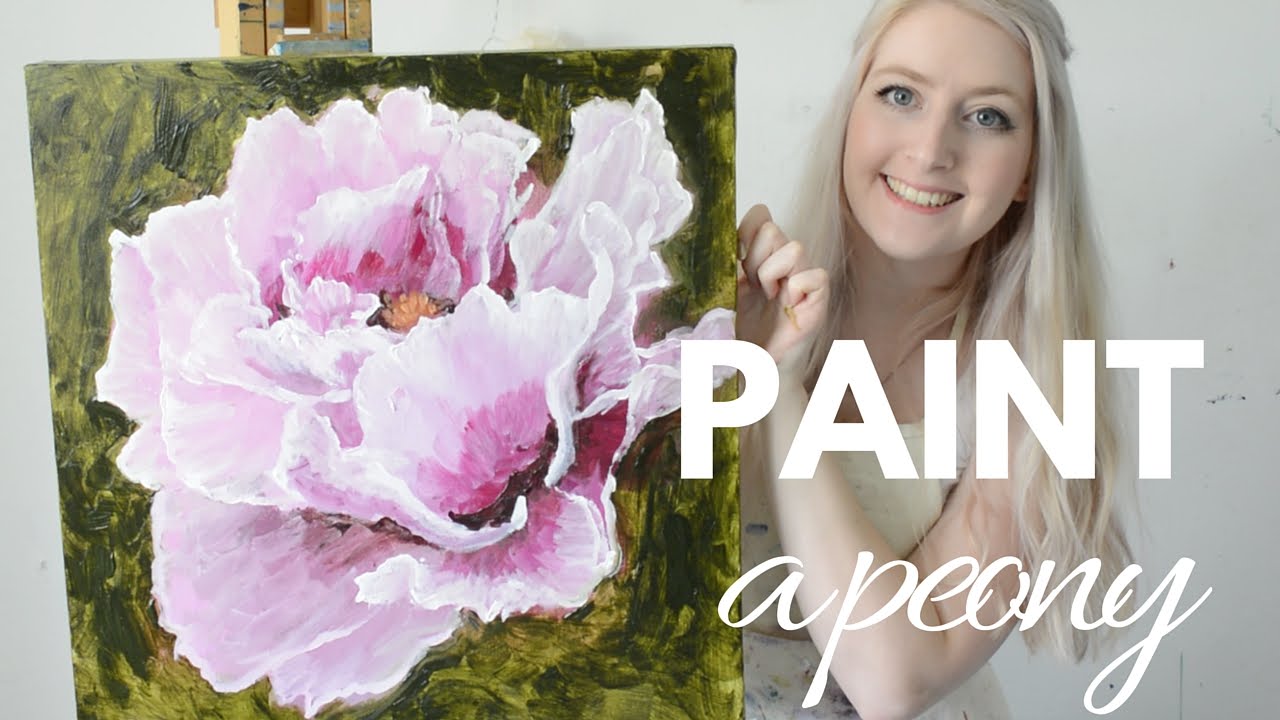


One of Katie's hugest contributions to her followers (we believe) is her calming and easy-to-follow tutorials. She is able to express her wealth of knowledge in a manner that is approachable, kind, and self-forgiving. When watching her videos, the most complicated steps can seem so simple, and the simplicity and softness in her teaching approach is inspiring. Watch her Youtube videos here:


She also does great video sessions on her own experiences with selling, pricing, and building her business from her art:


From her videos, it's easy to see how quick one can fall in love with her artistic "brand" as it were. She is soft-spoken and sweet, encouraging and peaceful. She's also relatable, as shown through her supporting vlogs. Although one watches the videos for Katie Jobling's art, soon one stays for the inspirational artist they may become.

That ends our first session of Marketing Yourself series! What did you think of the videos? Any Youtube stars you are a fan of and would like us to feature? If so, leave a message in the comments below!

---

KeenArt Media is an online fine art printing and framing company, specializing in canvas, archival and photographic prints and reproductions. We are proud to serve and support artists from all over Canada. 

KeenArt Media Ltd. Toll Free: 1-888-533-6278 (KeenART)
www.CanadaOnCanvas.com 
Working Hours: Pacific Standard Time
8:30 AM to 5:00 PM Monday to Thursday
8:30 AM to 4:00 PM Friday

Monday, April 10, 2017

Our 5 Tips for Setting Up An Artist Space


 An artist's environment is integrally important to an artist's development. Working in a space that is small and cramped isn't ideal, but for a lot of us it's an only option. For those  tiny areas, these are our top 5 tips for setting up an efficient and clean artist space.

1. Keep everything off the desk.

Penguin book designer Arielle Gamble works on illustrations for a new title.  Photo - Phu Tang.

Well, perhaps not everything. We know your desk will most likely be used to rest your pencils, paintbrushes, charcoal, water, etc. But these necessities aside, it is best to have your items off the table as much as possible, as this helps negate potential accidents from happening. The less items you have on your work space, the less likely a little charcoal thumbprint will stain the back of your work, or that your water jar will tip over when you reach for a paintbrush. This also makes clean-up easier, and prevents cross-contamination when you work from medium to medium.

2. Fill your wall-space wisely.

www.pinterest.com/pin/394768723563504058.jpg

When you're first starting out as an artist, chances are your space will be a bit on the smaller side. While it can be tempting to stack that corner up with shelving, leaving a wall space empty may actually be more beneficial. An intentional blank wall space can actually be more inspiring, as it not only breaks up the crowding of towering storage, but it also provides a gallery space for you to hang your work when you are finished. Take time to bask in the pride of your work, the deep satisfactions of a completed piece. Hanging a piece reminds you of your productivity, and keeps your steam going to start a new piece.

www.pinterest.com/pin/332984966179348492keep everything off the desk www.papernstitchblog.com/2015/09/10/interiors-with-amazing-natural-light

If not with your own work, a blank wall space also provides an excellent area for brainstorming and iterating. It's a space for visual references and conceptual experimentation, while leaving you and your work surface clean and ready for the final process.

3. High Shelves.

http://www.shabbycottagestudio.net/page/4/ www.styleathome.com/decorating/high-or-low/article/high-low-artistic-workspace

Now that being said, shelving is also immensely important when you have a small space. The trick is to make sure you invest in the right type of shelves for your space, and from our experience, it's better to go up-up-up. If your housing situation allows, invest in shelving brackets and learn how to screw them into the wall - this will keep both your desk clear, and reserve some wall-space for inspiration and brainstorming.

If you are renting and are not able to make holes in the walls, no fear! In these scenarios we recommend adding a shelf onto a desk - or better yet, building a desk from a shelf. Sliding a desk right up against an adjustable shelf like Ikea's Billy Bookcase still lets you keep your items off the desk, while opening up a bit of much-needed gallery or inspiration wall-space underneath. 

4. Wheel it in.

theeverygirl.com/how-to-style-a-desk-3-ways-for-the-student-the-post-grad-the-career-womanwww.pinterest.com/pin/197102921172070920

As your art grows, so will your work space. The best way to let both organically grow together is to keep as many components adjustable and movable as possible. By adding wheels to your furniture pieces and making each piece an isolated component on its own, you will be able to adjust your work space to fit your project, big or small. 


5. Be a bit of a Builder Bob.
Upcycling, Shena Meadowcroft

While this may sound like a bit of a stretch outside the art world, I cannot recommend it enough. The best way to ultimately make a space work for you, is to have some ability to build something to your exact need. Having some knowledge of wood types and boards (ie, birch plywood vs mdf) and some basic construction techniques will be of immense help (both to your space and to your pocket!). Once you get going, you may even find that building is actually quite fun, as it just opens up a whole new world of possibilities. 

So those are our 5 tips!! What did you think? If you have any tips you guys would like to share, let us know in the comments below and we can share them in an upcoming post!

----

KeenArt Media is an online fine art printing and framing company, specializing in canvas, archival and photographic prints and reproductions. We are proud to serve and support artists from all over Canada. 

KeenArt Media Ltd. Toll Free: 1-888-533-6278 
www.CanadaOnCanvas.com
Working Hours: Pacific Standard Time
8:30 AM to 5:00 PM Monday to Thursday
8:30 AM to 4:00 PM Friday 

Monday, April 3, 2017

Article Feature from ArtNews! - On Artist Block

We've all been there. We get an idea, struck with inspiration...then, as we ready ourselves in front of the easel, we freeze. The canvas is blank, and suddenly, our minds do the same.

The empty canvas dominating Tom Burckhardt’s cardboard installation FULL STOP, 2004–5, expresses the artist’s recurrent fear of “feeling stuck.” Original source: ArtNews
To help relieve your anxieties, we're sharing one of our favorite articles on the feared "artist block". Written by Ann Landi, Art New's Facing the Blank Canvas: Artists' Tips for Getting Started should spark some ideas in breaking out of the rut, or just energizing you to make that first stroke! Click on the image for the full article!

And what about you, readers? Any particular method you're a fan of? For me, I definitely need to cycle through various pieces all at once to help with my artblock. Share your suggestions in our comments section below!

KeenArt Media specializes in customized canvas and fine art printing and reproduction. We also offer services in scanning, plaque mounting, and custom-made artist canvases. We also do framing as well!  Check out our website or contact us for ways we can assist you with your latest piece.

KeenArt Media Ltd. 604-421-8000 (KeenART)
8:30 AM to 5:00 PM Monday to Thursday
8:30 AM to 4:00 PM Friday
info@keenartmedia.com

Monday, February 27, 2017

Becoming a Professional Artist: Recommended Booklist

Hello art-gang!

As we all know, making it big as an artist isn't easy. Thankfully, there are so many options available now for artists to print and sell their work individually. Rather than working with an agency or a manufacturer for printing, artists can sign up with Shopify or Etsy or Redbubble, or build an online shop right into their portfolio website. Of course, now the issue is with navigating all these options, and finding which combination is most effective for selling artwork.

But let's not dive too deep into the selling part just yet. If you're new or just starting to think about becoming a professional artist, we wanted to recommend a few books that we have personally found inspirational on our own artistic journey. These books are great for exploring examples of the modern art field, allowing you a glimpse of what paths you could take on your professional art career.

Before we launch our new series Marketing & Selling Your Artwork, we recommend giving these following books at least a skim:


1. The Gift, by Lewis Hyde


The Gift is one of my favorite books. Although academic in parts, it provides a really awesome philosophical view of how much art is "worth". Often artists are torn when assigning a price that both justifies and honors their work, while being marketable and competitive enough to help them keep working. This conflict can often contort an artist's vision, influencing them to sell themselves short, compromise on their views, or produce art that they have no connection with in order to keep the income sustainable. I love Hyde's philosophy of art being a gift instead of a commodity, and the ramifications that term has on an artwork's creation and true value- after reading it, it certainly influenced my approach to my own art, and inspired me to to shift my business expectations accordingly to honor and respect my artistic vision first.

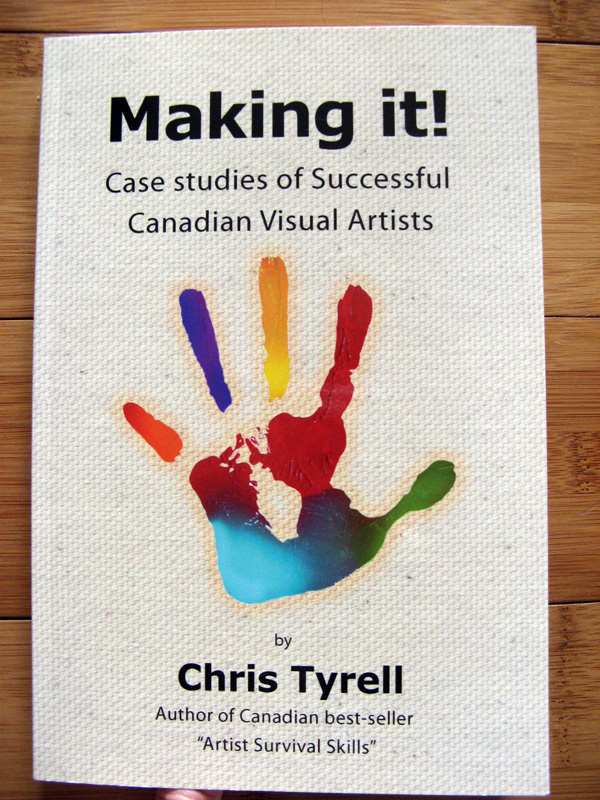
2. Making It! Case Studies of Successful Canadian Visual Artists, by Chris Tyrell

Photo of Making It, found from Carollyne Yardley's blog

"I was amazed by the stories of artists, but what truly amazed and moved me was the generosity of everyone with whom I spoke and their willingness to share insights into their experience. Marina Bychkova excels in niche marketing; Ross Penhall, by changing media, dramatically increased his creative efficiency and his income. Richard Tetrault’s career is a perfect exemplar of community involvement and the intrinsic and extrinsic rewards that social interaction can bring to an artist’s career." 
- Chris Tyrell, 


If you ever want to see real examples of real artists making it and their stories, this is the book for you. While it doesn't go in-depth with the step-by-step process of being successful, Tyrell's interview with various Canadian artists illuminates the many unique possibilities of how to become a successful artist, often found off the beaten path. Each individual story is inspiring and thought-provoking, and almost establishes a connection between the reader and the artist - unlike reading other step-by-step books, the stories almost absorb you into the artist's experience, as if you were living it yourself.

3. The Handmade Marketplace, by Kari Chapin


http://karichapin.com/books/


Now this book is an absolute must-have. Even though it isn't specifically for fine art, Kari Chapin does an excellent job exploring all the steps and possibilities of selling your  handmade arts and crafts from your home, and at an introductory, easy-to-digest level. It gives you a broad sweep of everything, from pricing, to online marketplaces and their pros and cons, getting a business licence, etc. My favorite snippet from this book is how Kari even explains how to define success for yourself, and how to plan your business accordingly. My current copy is sitting by my computer every day, bursting with post-it notes and tabs.


And there you have it! Our top 3 recommended books to help you begin navigating your professional artistic journey. Have a recommended book of your own? Let us know in the comments below!


And if you've already read these and are rearing to go, we can sort out all your fine art and archival scanning and printing needs!  Just click on our website link to go, or  give us a call - we're always happy to help!

KeenArt Media Ltd. Toll Free: 1-888-533-6278 (KeenART)
www.CanadaOnCanvas.com 
Working Hours: Pacific Standard Time
8:30 AM to 5:00 PM Monday to Thursday
8:30 AM to 4:00 PM Friday